 Gold and steel · disciplined
Nine unit types
- Heavy cavalry, foot knights and steady infantry
- Levy troops that cost little and hold ground
- The longest-ranged war machine in the game
- A battle-mage with four shared spells
Factions
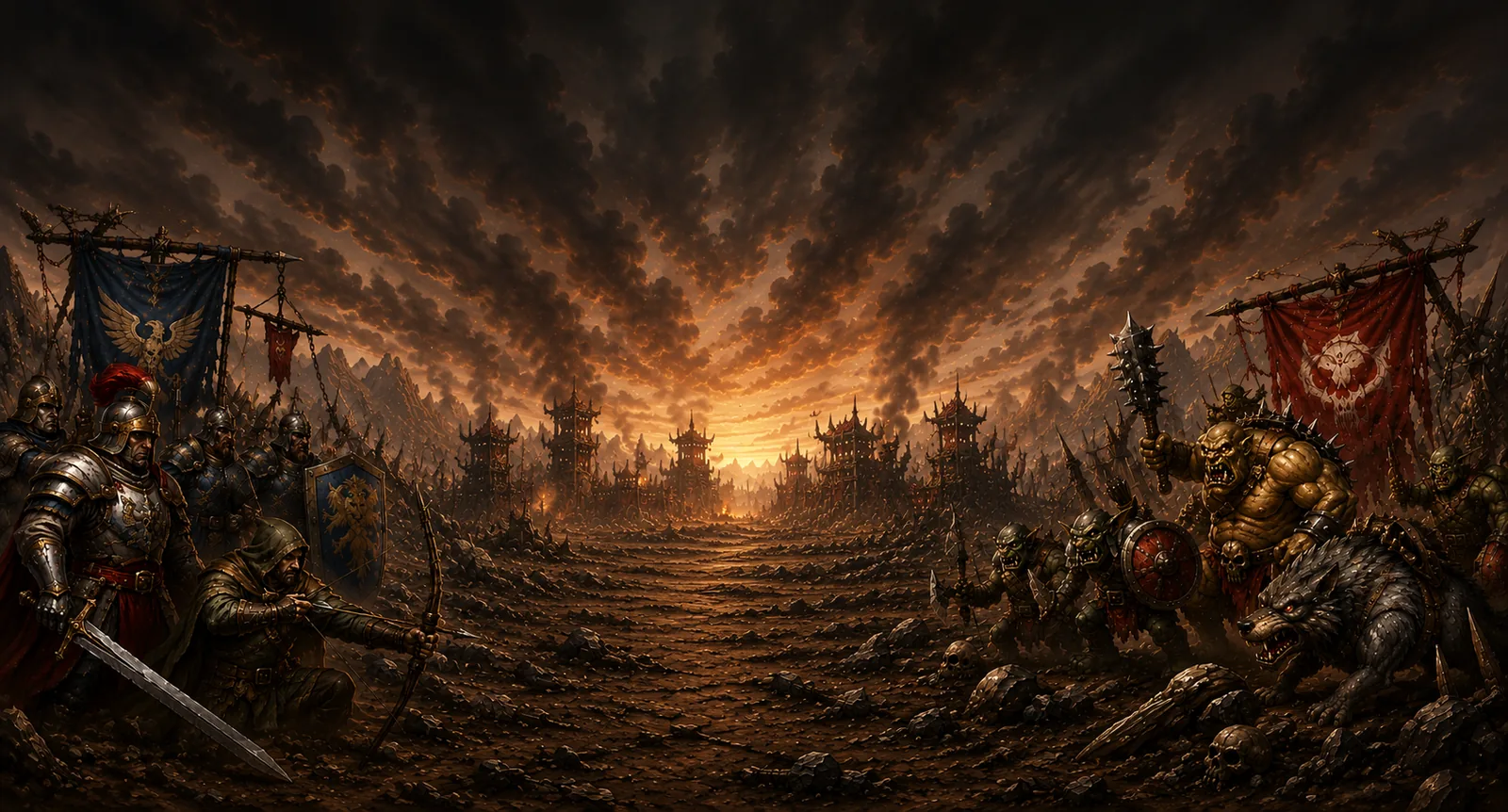
Two hosts fight the war you can play today. Four more are drafted and statted — the Unbound is in build as the first add-on pack, and each of the rest arrives with a campaign of its own.
Playable now · included in the base game
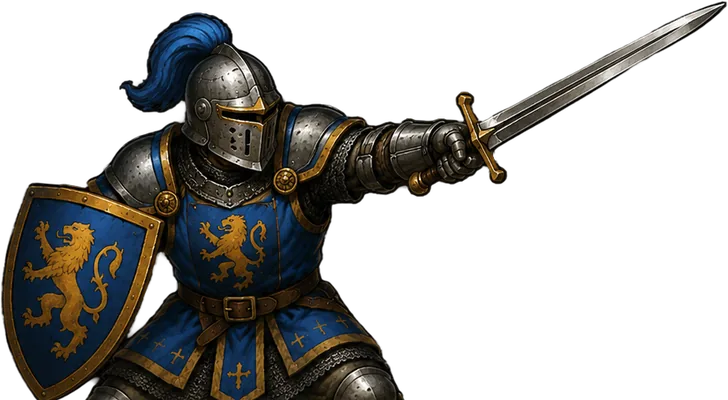
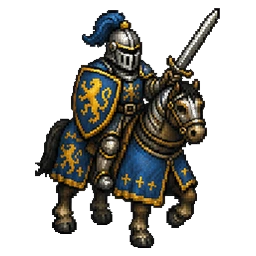
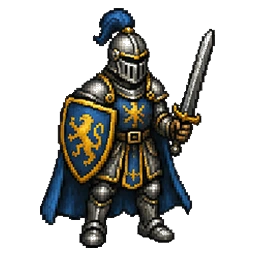
Drilled, provisioned and expensive. The Kingdom's strength is its shape — ranks that hold, flanks that don't gape, knights kept in hand until the moment they're worth spending. Its weakness is the same thing: a Kingdom line that loses its shape loses the battle.
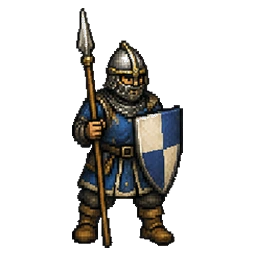
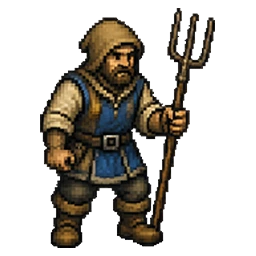
Alongside the professionals stand the frontier's own. Militia are townsmen with a spear and a season's drill; peasants are a levy handed a pitchfork that morning. They die easily, and they hold ground the knights would rather not.
Advanced trait — Disciplined. A unit braced in a shield wall, beside a friendly unit of the same type, shrugs off the morale shock of casualties that would break a looser army. Keep the Kingdom shoulder-to-shoulder and it does not crack.
How to play it: hold the line with Men-at-Arms, soften with archers and cannon, and spend the knights once — decisively — on a flank that has already started to bend.
Gold and steel · disciplined
| Unit | CV | Atk | Def | Move | Lives | Notes |
|---|---|---|---|---|---|---|
| Lord Knights | 5 | 5 | 5 | 3 | 3 | The command element — a leader aura steadies nearby troops in Advanced play. |
| Imperial Knights | 4 | 4 | 5 | 2 | 3 | Dismounted foot knights. May garrison the tower. |
| Men-at-Arms | 3 | 3 | 4 | 2 | 3 | The rank and file. The shield wall's backbone. |
| Militia | 2 | 2 | 3 | 2 | 3 | Town guardsmen. Cheap bodies for a long line. |
| Peasants | 1 | 1 | 2 | 2 | 3 | The levy. Numbers, and not much else. |
| Imperial Archers | 2 | 3 | 2 | 2 | 3 | Range 2. Move or shoot, never both. |
| Crossbowmen | 2 | 4 | 2 | 2 | 3 | Range 3, harder hitting, slower to bring to bear. |
| Mighty Cannon | 2 | — | 2 | 1 | 3 | Range 8 along a path of shot tiles. Can misfire at the muzzle. |
| Imperial Mage | 1 | 1 | 2 | 2 | 2 | Magic +2. Searing Bolt, Fireball, Terror, Force Push. |
CV is the Basic Combat Value — one number for attack and defence. Atk / Def / Move are the Advanced stats. Ranged units use separate missile dice.

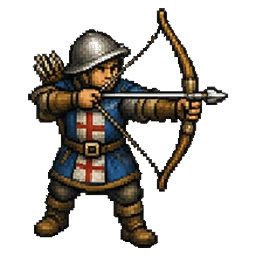

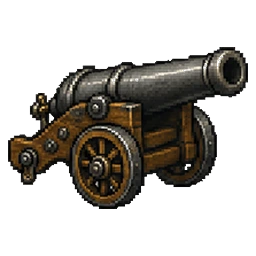
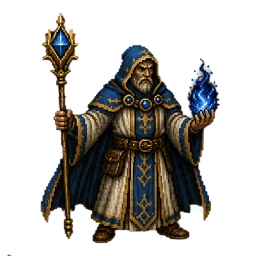
Playable now · included in the base game
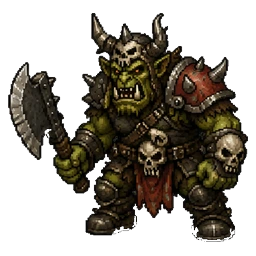
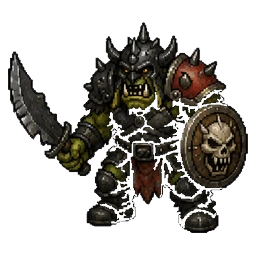
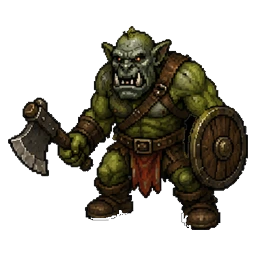
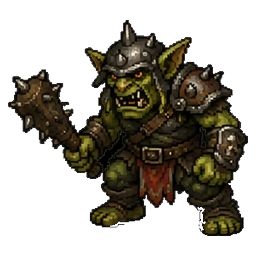
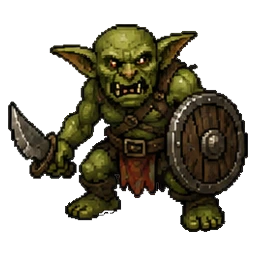
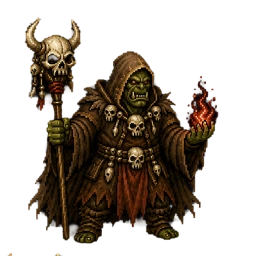
Tribes, not regiments. The Horde arrives as weight — goblins by the score, orcs behind them, and somewhere in the press a boss big enough to make the rest listen. Left alone the tribes feud and drift home with whatever they can carry. Given a mind, they become the thing the marches were never built to stop.
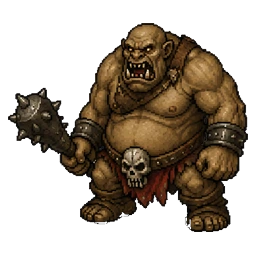
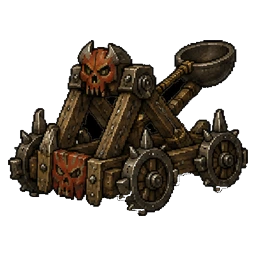
Nothing about greenskin strength is subtle. Dark Orks attack at five and defend at three. The Ogre Champion takes six hits to bring down and shrugs off wounds that would fell a knight. The Catapult lobs shot eight hexes and occasionally kills its own crew.
Advanced trait — Mob. Fearless, so casualties never break them — but undisciplined. Fell the Warboss, or a bigger 'ard boy standing among lesser orks, and the green tide loses its nerve and mills about confused.
How to play it: trade freely. Goblins are ammunition, not soldiers. Screen the Ogre in, keep the bosses alive, and win before the Kingdom's line ever forms.
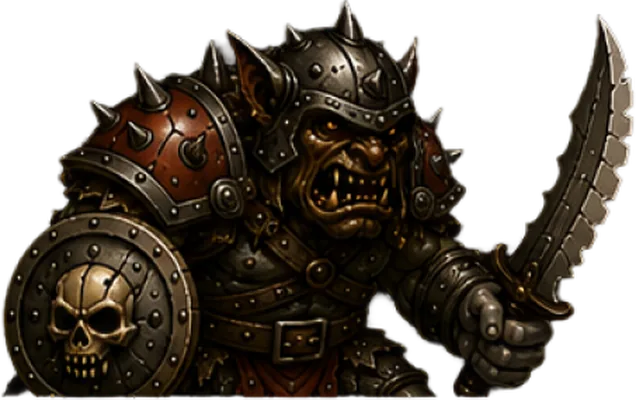
 Green and iron · a mob
| Unit | CV | Atk | Def | Move | Lives | Notes |
|---|---|---|---|---|---|---|
| Ork Big Boss | 5 | 6 | 4 | 3 | 3 | The hardest hitter in the game. Kill it and the mob wavers. |
| Dark Orks | 4 | 5 | 3 | 2 | 3 | Elite greenskins. All edge, no shield. |
| Orcs | 3 | 4 | 2 | 2 | 3 | The horde's spine. Hits harder than it holds. |
| 'Ard Goblinz | 2 | 3 | 2 | 2 | 3 | Meaner goblins with a bit of armour scavenged off the dead. |
| Goblins | 1 | 2 | 1 | 2 | 3 | Weak, numerous, and entirely expendable. |
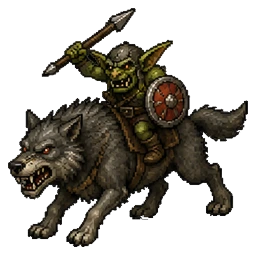
| Wolf Riders | 2 | 3 | 2 | 3 | 3 | Fast goblin cavalry. Double-moves on their own Battle card. |
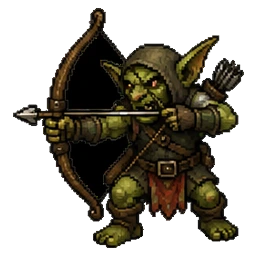
| Goblin Archers | 2 | 3 | 1 | 2 | 3 | Range 2. Deadly at distance, hopeless up close. |
| Ork Shaman | 1 | 1 | 2 | 2 | 2 | Magic +2, and unstable with it — a bad roll wounds the caster. |
| Ogre Champion | 4 | 5 | 4 | 2 | 6 | Toughness 3 wards wounds. Plays a shuffled multi-action on its own card. |
| Catapult | 2 | — | 2 | 1 | 3 | Range 8. Misfires, scatters, and occasionally works beautifully. |
Warboss Grulk fields as a story unit in North of the Kill — lower punch than the great boss, but tougher, with a wound-ward and an extra life.

On the march
Each of these has a tactical identity, a roster shape and a place in Averlund's story already worked out. The Unbound is being built now and is the first paid pack; the rest are waiting on art and a campaign worth fielding them in. Every pack unlocks its army and its war together.
Nothing here has a date. It gets one when it's built, announced in the updates and nowhere earlier.
Not an army — a web of cells
The bone relics the ork shamans carry came from somewhere, and the people who make them have been threaded quietly through Averlund for longer than the border has had watchfires. They are not a horde and never were: they are oath-bound cells, a courier network, and a piece of work called the Long Design that has been running for generations.
They talk like craftsmen, not fanatics. Nine stages, each needing a site, a relic and a price, discussed in the flat tone of people who have done this eight times already. That is the horror of them.
Tactical identity: speed, manoeuvre and objectives over annihilation. Ambushers who start the battle unseen, hit-and-run raiders, bone-lore casters and one very hard thing on a chain. Their Battle deck carries twice the Kingdom's double-moves and half its charges — they are built to take ground, not to trade lines.
The campaign turns the war around: you command the cell. The marches you defended in The Iron Betrayal become the ground you work in the dark.
One-off unlock — £3.99. The faction and its campaign arrive together.
Older than the Kingdom
The northern barrows were dug by someone, and they were never empty. What lies in them does not negotiate, retreat or rout.
Tactical identity: relentless and fearless — immune to morale entirely, which makes them the perfect foil to the Advanced ruleset's nerve mechanics. Slow, cheap, and utterly indifferent to casualties.
Mountainfolk
Stubborn, armoured and dug in. The Holdfast does not manoeuvre, because it has never needed to — it takes the ground it wants, and then the argument is over.
Tactical identity: high toughness and heavy armour saves, crossbows and war machines, and the worst Move stats in the game. A Holdfast army that has to chase you is losing.
Elves
Few, ancient and irreplaceable. The Highborn fight the way a duellist fights a brawler: perfectly, at range, and never twice in the same place.
Tactical identity: the best bowmen and battle-mages in Averlund, fast and fragile, with a roster small enough that losing a single unit changes the plan. A skirmisher's army with an elite's price tag.
Also drafted
The base game keeps one thread deliberately unpulled: where ork witch-lore comes from, and who dug the barrows. The Unbound is the answer walking onto the board — which is why its campaign is a villain's campaign rather than another defence of the marches.
Under the hood
Factions aren't cosmetic reskins. Each one is a complete data set the engine loads, which is why new armies can arrive without the rules changing underneath them.
Unit types with Combat Value, Advanced attack and defence dice, Move, toughness, lives, range and special rules.
Its own activation cards — which unit types march together, who charges, who double-moves, and which units get a card to themselves.
An Advanced-only character rule: the Kingdom's discipline, the Horde's mob mentality, the Barrow-Dead's immunity to fear.
So every army can be fielded against every other in Skirmish and Quick Battle at a fair muster.
New factions aren't locked to their own campaign. The moment a pack unlocks, its armies appear in Skirmish and Quick Battle alongside everything you already own — pick any two sides, set a points cap and build a force.
Locked armies stay visible in those lists, marked with a padlock, so you always know what a pack adds before you decide whether you want it.
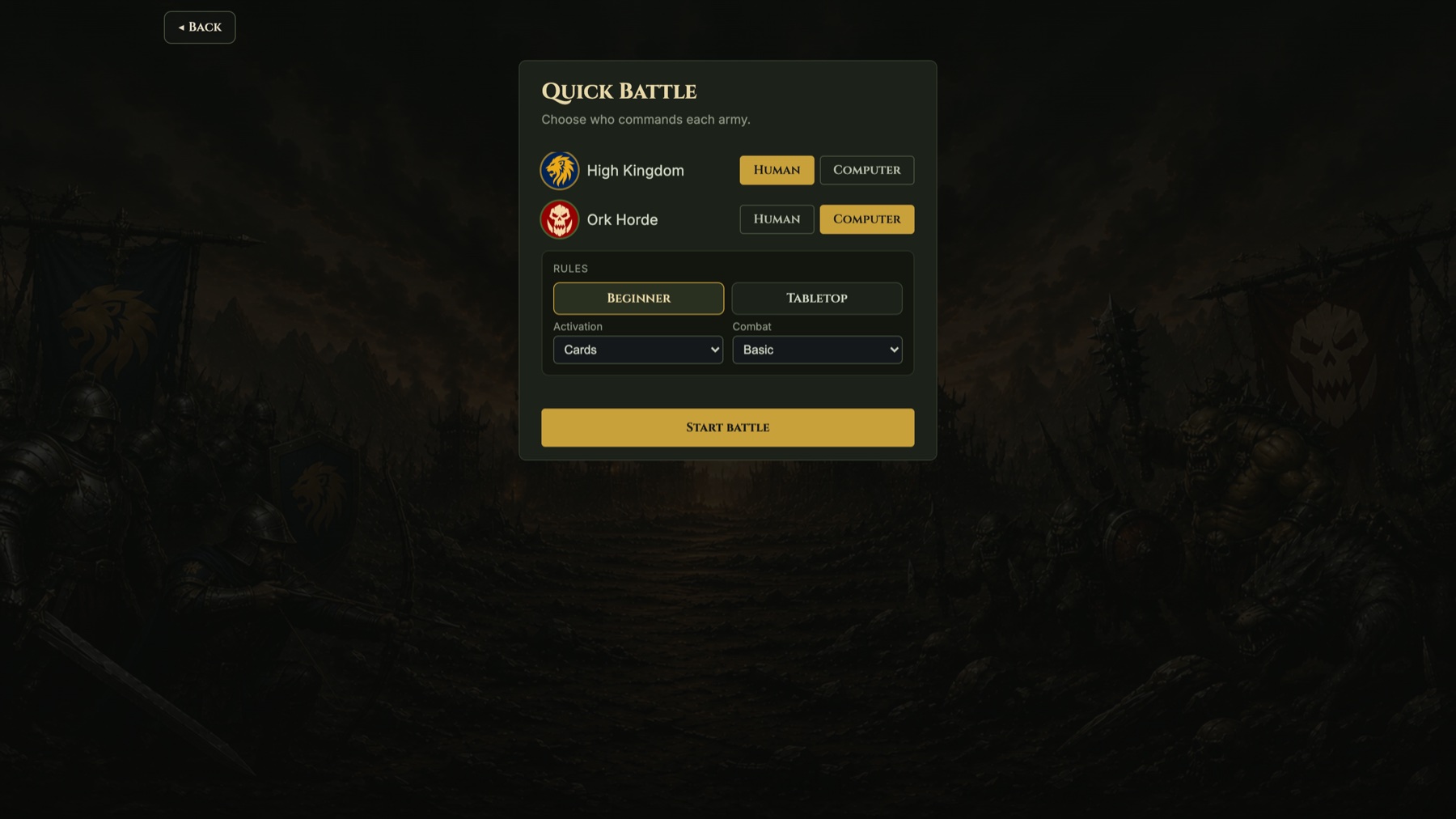
Both shipping rosters are included in the base game — no unlocks, no grinding, no packs required.